Industrial blowers are machines designed to move air or gas in high volume and, in many cases, under pressure. They are used across many sectors—from manufacturing and processing plants to waste treatment, HVAC, and pollution control. These devices help with tasks like ventilation, exhaust of fumes, material conveying, cooling, and maintaining air quality in production environments.
As industries aim for higher efficiency, stricter environmental norms, and cleaner workplaces, industrial blowers have evolved. Modern designs incorporate variable speed drives (VSDs or VFDs), higher-efficiency motors, quieter operation, and materials or coatings that can withstand harsh conditions. Understanding the types, operating principles, and efficiency trade-offs is important for engineers, facility managers, and decision-makers planning to implement or upgrade blower systems.
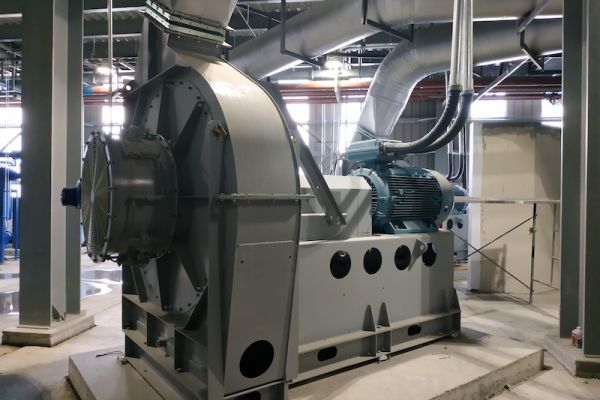
Importance of Industrial Blowers in Modern Industry
-
Maintain safe and healthy work environments by removing dust, fumes, and pollutants.
-
Improve equipment performance and reduce downtime by managing temperature and moisture.
-
Support energy savings and cost reductions with efficient airflow and smart control.
-
Help industries comply with air quality, safety, and environmental regulations.
Types of Industrial Blowers
-
Centrifugal Blowers: Widely used; good for moderate to high pressure; used in ventilation, exhaust, and dust collection systems.
-
Positive Displacement Blowers (e.g. Roots, Rotary Lobe): Deliver constant airflow at varying pressures; useful in pneumatic conveying, wastewater treatment.
-
Regenerative / Side-Channel Blowers: Provide higher pressures at lower maintenance; used where air or gas must be moved quietly and steadily.
-
Axial Flow Blowers: Best where large volumes of air with low pressure are needed; lighter, simpler design.
Applications Across Industries
-
HVAC & Building Ventilation: Moving and conditioning air in comfort, commercial or industrial environments.
-
Dust Collection & Air Pollution Control: Blowers paired with filters, cyclones, or scrubbers to remove particulates and harmful gases.
-
Material Handling / Pneumatic Conveying: Transporting powders, granules or light solids through pipelines using airflow.
-
Cooling & Drying Processes: Used in processes such as metal/extruded parts cooling, drying painted or coated surfaces, etc.
-
Wastewater & Treatment Plants: Aeration, ventilation, odor control, and biological treatment processes.
Efficiency & Performance Insights
-
Many modern blowers use Variable Frequency Drives (VFDs) to adjust speed with demand, which saves power when load is lower.
-
Blade geometry (forward-curved, backward-inclined, radial) significantly affects efficiency, noise levels, and ability to deal with static pressure.
-
Air bearing or oil-free designs reduce friction, lower maintenance, and improve lifespan.
-
Regular maintenance and selecting blowers designed for the intended duty cycle help preserve efficiency over the long run.
Selection Checklist
-
Determine required airflow (CFM or m³/min) and pressure (static pressure) for your process.
-
Choose blower type suited for the application (axial, centrifugal, positive displacement, regenerative).
-
Evaluate motor efficiency, use of VFD, and compatibility with power supply.
-
Consider material of construction (for temperature, corrosion, particulates).
-
Check noise level & enclosures if needed for workplace comfort.
-
Look for features that simplify maintenance (easy access, durable bearings, replaceable parts).
FAQs
Q1. How does a centrifugal blower differ from an axial blower?
Centrifugal blowers move air radially (turning it sideways) and can generate higher pressure, while axial blowers move air in a straight line and are good for high volume but low pressure.
Q2. Are blowers energy intensive?
They can be, but modern designs with VFDs, efficient motors, proper sizing and blade design help reduce energy consumption significantly.
Q3. What is positive displacement blower used for?
Used in applications that require consistent airflow or pressure even under varying load and resistance—for example, pneumatic conveying or aeration.
Q4. Can blowers be used in high temperature or corrosive environments?
Yes, but they must be made with suitable materials (stainless steel, corrosion-resistant coatings) and design features (heat-resistant bearings, enclosures).
Q5. How is noise handled in industrial blowers?
Noise is controlled by blade design, using backward-inclined or airfoil blades, physical enclosures, and sometimes dampening materials.
Conclusion
Industrial blowers are foundational components in many industrial and environmental systems. From ventilation and dust collection to material handling and process cooling, their right selection and efficient operation can significantly impact both cost and performance. With recent innovations—highly efficient motors, smarter control systems, and better materials—blowers are more reliable, lower maintenance, and more energy-friendly than ever.