Renewable plant energy systems refer to facilities that generate power from naturally replenishing sources such as sunlight, wind, water flow, geothermal heat, and biological materials. These systems exist to provide long-term energy stability while reducing reliance on fossil fuels and minimizing environmental impact.
Rapid population growth, industrial expansion, and increasing electricity demand have encouraged the development of sustainable energy infrastructure. Technologies such as solar photovoltaic farms, wind turbine installations, biomass processing plants, and hydroelectric stations are widely recognized examples. Advances in energy storage systems, grid integration, and digital monitoring have strengthened operational efficiency.
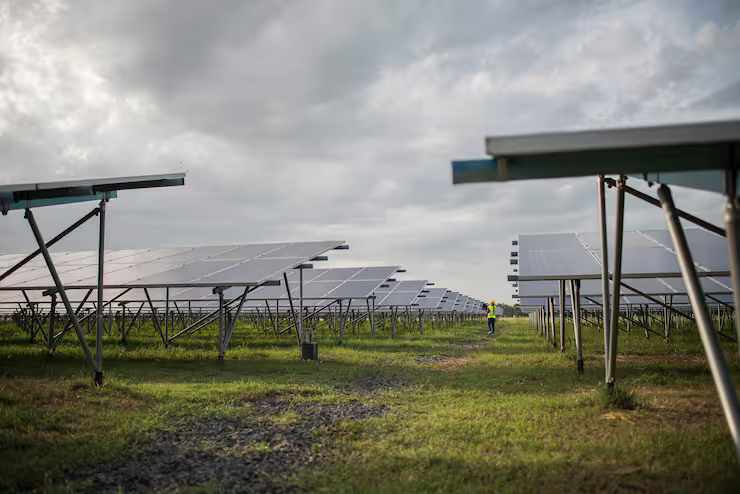
These systems also align with global climate commitments and environmental goals. Nations and organizations increasingly examine renewable energy investment opportunities to balance economic development with ecological responsibility.
Importance of Renewable Energy Plants Today
Renewable energy plants influence multiple sectors including manufacturing, transportation, agriculture, and urban development. Their importance extends beyond electricity production into environmental protection and energy resilience.
Key reasons this topic matters:
-
Reduced greenhouse gas emissions support climate stability.
-
Diversified energy sources improve national energy security.
-
Long-term infrastructure development encourages technological innovation.
-
Participation in the carbon credit market allows organizations to offset emissions.
-
Integration with smart grid technology improves electricity distribution efficiency.
The transition toward renewable sources also addresses challenges such as air pollution, volatile fuel markets, and sustainability commitments in corporate environmental strategies. Industries increasingly evaluate solar power financing models, wind energy infrastructure planning, and green hydrogen technology research as part of future-focused energy planning.
Examples of Renewable Energy Plant Types
| Energy Source | Typical Plant Type | Primary Benefit |
|---|---|---|
| Solar | Photovoltaic farms | Scalable clean electricity generation |
| Wind | Onshore and offshore turbines | Strong output in windy regions |
| Biomass | Organic fuel processing plants | Utilization of biological waste |
| Hydropower | River or dam-based stations | Consistent large-scale production |
| Geothermal | Underground heat extraction | Reliable baseload energy |
Recent Updates and Industry Trends
The past year has seen significant developments in renewable energy systems worldwide. Governments, research institutions, and energy companies continue investing in technology refinement and infrastructure expansion.
Notable developments from 2025–2026 include:
-
Expanded adoption of green hydrogen technology for industrial fuel alternatives, particularly in Europe and Asia.
-
Increased investment in grid-scale battery installations supporting solar and wind integration.
-
Growth of offshore wind farms with improved turbine efficiency.
-
Greater use of AI-driven predictive maintenance in renewable plants.
-
Updated climate commitments announced during international environmental conferences in late 2025.
Technological improvements have also enhanced forecasting accuracy, operational reliability, and data-driven performance optimization. These advances strengthen confidence in renewable energy investment strategies and long-term infrastructure planning.
Trend Overview Table
| Trend | Description | Industry Impact |
|---|---|---|
| Energy storage expansion | Advanced battery deployment | Stable power supply |
| Digital monitoring | AI-based plant analytics | Predictive maintenance |
| Hydrogen innovation | Alternative clean fuel research | Industrial decarbonization |
| Offshore wind scaling | Larger turbine installations | Higher generation capacity |
Laws, Policies, and Government Programs
Renewable energy plant development is strongly influenced by regulatory frameworks. Policies vary by country but commonly include incentives, environmental standards, and grid integration guidelines.
In India, renewable energy policy emphasizes sustainable growth through initiatives such as:
-
National Solar Mission encouraging solar power adoption.
-
Renewable Purchase Obligations guiding electricity distribution targets.
-
Clean energy tax incentives supporting infrastructure development.
-
Environmental impact assessment requirements for plant approvals.
Internationally, agreements such as the Paris Climate Accord shape renewable deployment targets. Many countries also promote participation in carbon credit market mechanisms, allowing industries to track emission reductions through verified programs.
Regulatory stability often influences renewable energy investment decisions, making policy awareness essential for planners, engineers, and researchers.
Tools and Resources for Renewable Energy Knowledge
A wide range of digital tools, platforms, and informational resources support learning, research, and planning related to renewable energy plants.
Useful resources include:
-
Energy simulation software for solar and wind forecasting.
-
Smart grid technology dashboards for energy distribution analytics.
-
Carbon emissions tracking calculators used by sustainability teams.
-
Renewable energy research portals from international agencies.
-
Technical documentation databases covering plant design standards.
Examples of Resource Categories
| Resource Type | Purpose | Typical Users |
|---|---|---|
| Simulation software | Energy output estimation | Engineers, researchers |
| Data analytics platforms | Performance monitoring | Plant operators |
| Sustainability calculators | Emission tracking | Environmental analysts |
| Technical standards libraries | Compliance guidance | Infrastructure planners |
Continuous professional education, academic journals, and industry conferences also provide valuable insights into renewable plant technologies.
Frequently Asked Questions About Renewable Energy Plants
What are renewable plant energy systems?
They are facilities generating electricity from renewable sources such as solar radiation, wind movement, water flow, geothermal heat, or biomass materials.
How do energy storage systems support renewable plants?
Storage systems capture excess electricity during peak generation periods and release it when production declines, improving grid stability.
What is green hydrogen technology?
It involves producing hydrogen fuel using renewable electricity, offering a low-emission alternative for industries requiring high energy density fuels.
Why is smart grid technology important for renewable energy?
Smart grids use digital monitoring, automation, and data analytics to manage variable renewable energy flows efficiently.
What role does the carbon credit market play?
It allows organizations to quantify emission reductions and participate in environmental accountability programs aligned with climate targets.
Conclusion
Renewable plant energy systems represent a fundamental shift toward sustainable electricity generation. With growing emphasis on renewable energy investment, solar power financing models, wind energy infrastructure expansion, and advanced energy storage systems, the sector continues evolving rapidly.
Environmental awareness, technological innovation, and supportive policy frameworks are driving global adoption. From green hydrogen technology research to smart grid integration, renewable plants are shaping future energy landscapes.
Understanding trends, regulatory influences, and available tools helps individuals, organizations, and researchers navigate this dynamic field effectively. Continued focus on sustainability and innovation ensures renewable energy remains central to long-term energy planning and environmental stewardship.