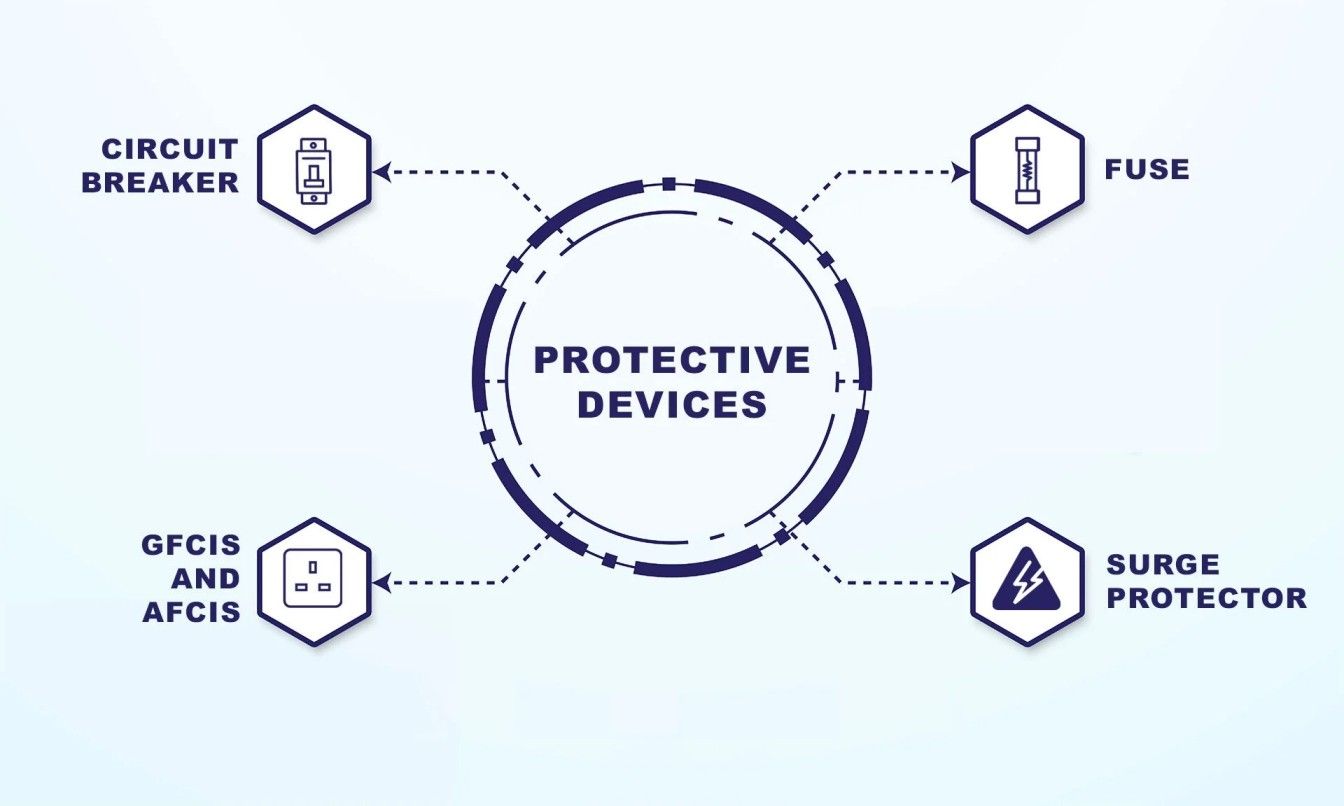
Understanding what circuit protection is and why it exists helps anyone dealing with electrical systems—from homeowners and technicians to educators and hobbyists. At its core, circuit protection refers to devices or methods that guard electrical systems from damage when excessive current, voltage surges, or faults occur. These protective elements—such as fuses, circuit breakers, and surge protectors—act like safety valves, interrupting dangerous currents before they harm equipment or cause fire.
Circuit protection exists because electricity, while powerful and useful, can become hazardous. Electrical faults—short circuits, overloads, lightning surges—can lead to overheating, equipment failure, or fire. By including protection in a circuit design, we create a deliberate “weak point” that opens safely under stress, preserving the rest of the system.
Why circuit protection matters now, who it affects, and what challenges it solves
Circuit protection matters today more than ever. As societies rely heavily on electricity—running homes, critical infrastructure, data centers, medical devices, electric vehicles—even brief interruptions or damage can cause major disruption.
People and sectors impacted include:
-
Homeowners safeguarding appliances and reducing electrical fire risk.
-
Businesses protecting servers, manufacturing equipment, and continuity.
-
Engineers and safety professionals ensuring compliance and reliability.
-
Educators and students learning safe electrical design principles.
Common problems circuit protection solves:
-
Preventing overheating and fire from overloaded wiring.
-
Protecting sensitive electronics from voltage spikes or surges.
-
Isolating faults to avoid widespread outages.
-
Minimizing downtime and repair costs.
Recent developments, trends, or news from the past year
In the past year, several trends have shaped the field of circuit protection:
-
Increased adoption of smart circuit breakers that communicate status and trip-history through network connections—growing through 2024 into 2025. Smart devices now support remote monitoring and firmware updates, enhancing safety and diagnostics.
-
Wider availability of solid-state circuit protection devices—using semiconductors rather than mechanical components—for faster response times and longer lifespans, gaining traction particularly in renewable-energy installations.
-
Expansion of surge protection standards due to the rise of electric vehicle (EV) charging infrastructure and solar installations, where unexpected surges from grid fluctuations can be more frequent.
-
More emphasis on arc fault detection and ground fault interruption in residential codes, aligning with updates from safety bodies, especially considering the increased use of high-power appliances.
How circuit protection is shaped by laws, regulations, and programs
Laws and standards play a major role in how circuit protection is implemented:
-
Electrical codes—such as the National Electrical Code (NEC) in the U.S.—mandate the use of specific protective devices. Examples include requirements for ground fault circuit interrupters (GFCIs) in bathrooms and kitchens, and arc fault circuit interrupters (AFCIs) in living spaces.
-
In many countries (e.g., India), the Bureau of Indian Standards (BIS) and the Indian Electricity Rules require certified protective devices—like MCBs (miniature circuit breakers), RCCBs (residual current circuit breakers), and surge protection devices—to be used in electrical installations.
-
Utility-driven programs sometimes subsidize smart breakers or surge protectors as part of grid modernisation or public safety efforts. These initiatives often aim to reduce electrical fires or speed response to outages.
-
Building codes for commercial and residential construction frequently require periodic testing and certification of circuit protection systems—ensuring devices function correctly over time.
Helpful tools, websites, calculators, services related to circuit protection
-
Online fuse and breaker sizing calculators—these tools let you enter load current and voltage and compute recommended fuse or breaker ratings.
-
Manufacturer configurators—e.g., those from Eaton, Schneider Electric, and ABB—help you select proper circuit protection components based on environmental conditions and load types.
-
Educational websites—like IEEE Spectrum or the Electrical Safety Foundation International (ESFI)—offer guides and videos explaining protective principles.
-
Mobile apps—smart breaker apps tied to connected panels allow real-time monitoring, remote resets, trip notifications, and firmware updates.
-
Safety checklists and templates—for electricians or DIYers—ensuring key protective elements (GFCI, AFCI, surge suppression) are present where required by code.
Common questions and clear answers
Q: What is the difference between a fuse and a circuit breaker?
A fuse is a one-time element that melts when current exceeds its rating, interrupting the circuit. A circuit breaker acts like a switch that trips when excess current or fault is detected—and can be reset afterward.
Q: Is surge protection always necessary in homes?
Using surge protection is strongly recommended for protecting sensitive electronics (computers, TVs, home offices) even if not legally required. In areas with frequent lightning or grid switching, it can prevent costly damage.
Q: What does “AFCI required” mean in wiring specifications?
It indicates that circuits must include an Arc Fault Circuit Interrupter, which detects arcing faults—sparks—in wiring or devices that could ignite fires earlier than standard breakers.
Q: How do I choose the right breaker size for a circuit?
Select a breaker rated slightly above the continuous load current—typically 125% of the normal load—while matching the wire's ampacity and rating of appliances.
Q: Can smart breakers replace traditional protection?
Smart breakers still provide standard protection, but add communication and monitoring. They don’t eliminate the need for proper sizing and device selection—they complement, not replace, core protection.
Summary of key protective devices
| Device Type | Primary Function | Typical Use |
|---|---|---|
| Fuse | Overcurrent protection (one-time) | Simpler circuits; older or small systems |
| Circuit Breaker (MCB/MCCB) | Overload and short-circuit protection (resettable) | Most residential and industrial systems |
| RCCB / GFCI | Detects ground leakage; protects against electric shock/fire | Wet areas like bathrooms, kitchens |
| AFCI | Detects arcing faults to prevent fires | Bedrooms, living rooms, new wiring installs |
| Surge Protection Device | Shields against voltage spikes | Electronics, EV chargers, solar inverters |
| Smart Breaker | Standard protection plus networked monitoring/control | Smart homes, data centers, industrial sites |
Conclusion
Circuit protection is a fundamental element of electrical safety that prevents damage, fire, and interruptions by carefully interrupting dangerous conditions. Its importance spans from everyday households to large infrastructure systems, supported by evolving technologies like smart and solid-state devices, and guided by regulations and codes. By using tools, calculators, and resources, you can ensure your circuits are both safe and compliant.
Understanding the roles of various protective devices (fuses, breakers, AFCIs, surge protectors) helps you design systems that respond safely to faults. Staying updated with recent trends—like smarter breakers and stronger surge requirements—and referencing standards in your region ensures both safety and longevity. With clear knowledge and the right tools, maintaining effective circuit protection becomes accessible and manageable.